
Sound Like the Best Version of You

Chen makes his recommendation near the end of the meeting. It is the sharpest idea anyone has offered all hour. Two people nod. The agenda moves on.
That evening he makes a similar point in Mandarin, over dinner with a former colleague. The table stops. Someone asks him a follow-up question. Then another.
Nothing about his thinking changed between those two rooms. Something about his delivery did.
If you recognize that gap, this post is about closing it. Not by becoming a different speaker. The best version of you is not someone new. It is the person your colleagues already meet in your first language, carrying that same weight in English.

Professional speaking during a team meeting, mid-sentence, colleagues listening.
Why your ideas land softer in English than in Mandarin
The most common cause is physical, not linguistic: your breath and posture let go before your sentence ends.
Speaking a second language uses attention. Grammar and vocabulary compete for it. So does pronunciation. By the final few words, most of that attention has already moved to what you plan to say next.
The last three words get quieter. Your chin drops slightly. Your eyes travel toward your notes or the next slide before your voice has finished.
None of it feels dramatic while you are speaking. To the room, it changes how the idea lands.
Listeners feel that ending. They read it as uncertainty, even when you are completely certain.
Endings carry more weight than beginnings. Your opening words set up the idea. Your closing words tell the room how much to trust it. A sentence that fades tells people the speaker is already moving on, so they move on too.
We see this in diagnostic recordings constantly, and almost always in speakers who are senior and highly fluent. It is a physical habit, which means it is trainable. That is also why this work keeps paying off well into adulthood. Adults retain the brain plasticity needed to build new speech patterns.
That premise sits underneath how the method trains pronunciation as a physical skill. The SpeakEasy Method® treats your voice as something you move, not something you memorize.
What "the best version of you" actually means
The best version of your English voice carries the same presence you already have in your first language.
It is not a different accent. It is not someone else's voice. Your accent is evidence of your bilingual intelligence and your journey, and it stays exactly where it is.
Many people hesitate here. Changing how you sound can feel like giving something up. That is a fair worry, and it deserves a direct answer. Training the ending of a sentence does not touch your identity. It touches your breath and your posture.
Clarity and presence matter far more than a native accent. What changes is how completely your voice arrives.
The habit that changes how your last words land
Stay lifted through the final line. Keep your posture and breath open until one beat after your sentence ends.
Here is what that looks like in practice:
Notice the collapse. Most speakers exhale and lower the chest on the last three or four words.
Stay lifted. Hold your posture open through the end of the sentence.
Keep the breath connected. No reset between phrases. One breathline, flowing forward.
Hold one beat of silence. Let the ending sit before you move on.
Step four does the most work. Your listener is still deciding what to make of your point during that beat. A collapsed body says the idea is finished with you. An open body says the idea is still yours.
Try it now. Choose one sentence you say often at work. Say it twice.
The first time, say it the way you normally would. The second time, stay lifted one beat past the final word. You will hear the difference in the ending, not the beginning.
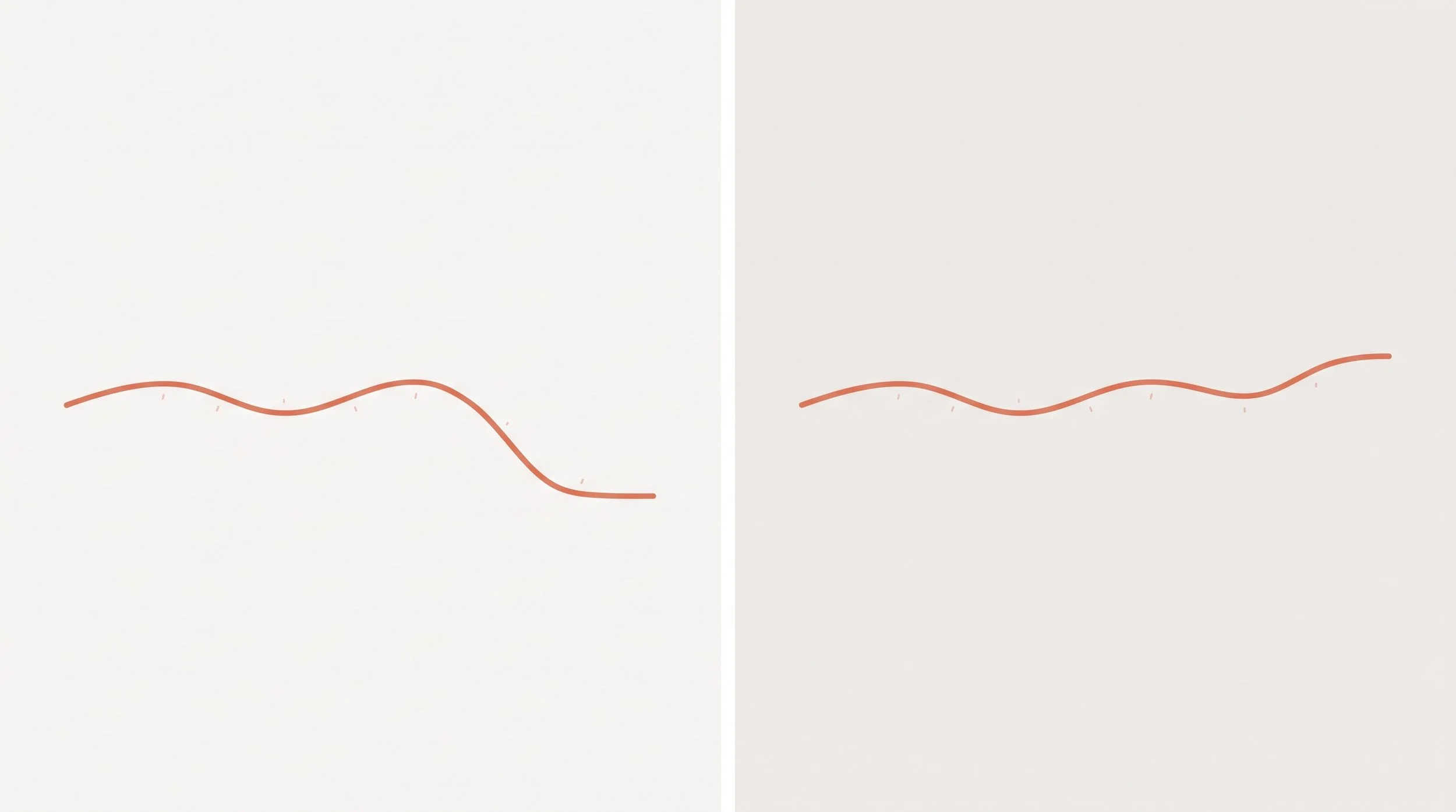
Diagram comparing a sentence that loses energy at the end with one carried through the final word.
What changes when this clicks
When your sentences end with the energy they started with, people respond to the idea itself.
You will likely notice it first in small moments. A colleague waits instead of jumping in. Someone quotes your phrasing back to you later in the meeting.
None of that requires a new personality. It requires your body to stay with the idea until the final word is out.
That is one habit. It sits inside a larger approach that trains pronunciation through movement, memory, and sound. If you want the full arc, the SpeakEasy Masterclass moves through two phases, from foundational clarity to expressive delivery.
Where to start
Chen did not need a different voice for that meeting. He needed the ending of his sentences to carry what the beginning already promised.
The goal is not to sound like someone else. It is to sound like the best version of you. You already know what that sounds like, because you have heard it in your first language your entire life.
Curious which sounds and habits are shaping how you land right now? Try our free pronunciation diagnostic. You record a short sample and get an AI report showing where you are today. No pressure, just clarity.

Professional listening after making a point in a meeting, relaxed and present.